genuine bpc 157 BPC-157 is being marketed as a “healing peptide” for tendon injuries, joint pain, gut repair, inflammation, and recovery. The problem is that “healing” biology is not always simple in people with cancer Regeneration or Risk? A Narrative
Description
Growth Factor Modulation and Structural Remodeling Investigations suggest that BPC-157 might upregulate pathways related to growth hormone receptors and collagen synthesis, thereby facilitating fibroblast proliferation and matrix remodeling
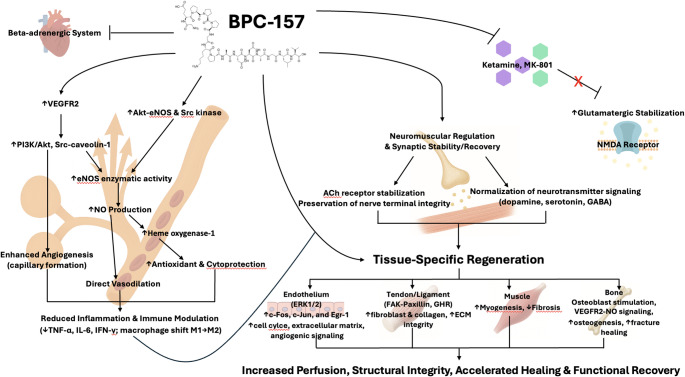
GLOW Blend Peptide Mechanistic Profile GLOW Blends research utility is defined by three complementary mechanistic domains: Cytoskeletal-Associated Pathways (Thymosin Beta-4 / TB-500) Supports studies of actin-binding interactions Enables investigation of cytoskeletal organization and cell-migration models Vascular- and Stress-Response Signaling (BPC-157) Used to explore endothelial-associated pathways Supports research into fibroblast-linked signaling and inflammation-related regulatory networks ECM-Associated & Metallopeptide Pathways (GHK-Cu) Frequently used in studies of matrix-regulation mechanisms Supports investigation of copper-dependent enzymatic activity and redox-associated signaling Multi-Component Pathway Modeling Allows examination of parallel structural, ECM-associated, and metallopeptide pathways Useful for studying coordinated signaling across cytoskeletal, matrix, and redox systems These mechanistic domains position GLOW Blend peptide as a multi-pathway research substrate for studying cytoskeletal biology , ECM-associated signaling , and copper-dependent molecular pathways

Rotate across three sites
In several of these models, BPC-157 reduced neurological deficits and sped up functional recovery

Future trials should examine both induction and maintenance therapy applications, biomarker responses, and endoscopic healing outcomes to establish clinical utility
Many women find this gives quick relief during particularly heavy days